What Nonprofit Organizations Need to Know About Running a School Supply Drive
If you are a nonprofit looking to run a school supply drive, you are in good company. Back-to-school supply drives are one of the most common community events nonprofits and civic organizations take on each year, and one of the most logistically demanding, especially for organizations that rely heavily on volunteers.
Here is what the organizations that run them smoothly have in common.
PLAN THE LOGISTICS BEFORE YOU PLAN THE MARKETING
The most common mistake is promoting the drive before the logistics are figured out. How many students are you serving? What grade levels? What specific items do those grade levels need? Where are kits being assembled? Where are they being distributed? Who is responsible for each step?
Answering these questions first means the marketing, the donation asks, and the volunteer recruitment all point toward a specific, achievable outcome rather than a vague goal.
CONSIDER A TURNKEY KIT PROGRAM INSTEAD OF COLLECTING DONATIONS
Donation-based drives have a built-in problem: the items that come in are rarely the items that are most needed. Well-intentioned donors give what they have or what is on sale, not necessarily what is on the supply list. The result is a surplus of some items and a shortage of others.
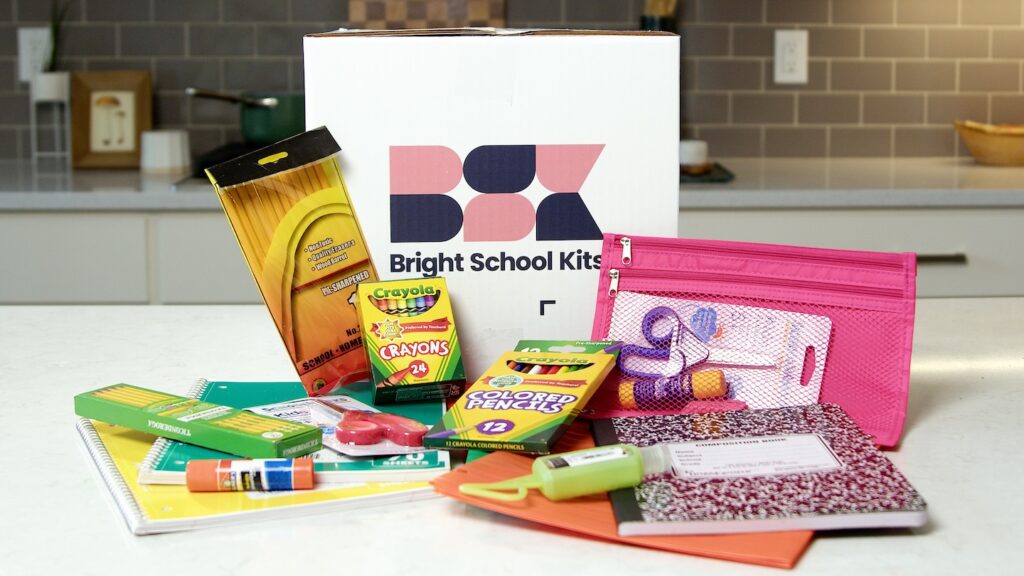
A turnkey kit program solves this. Instead of collecting individual donations, the organization orders fully packed, grade-specific kits from a supply vendor. Every student receives the same items. Nothing runs short. Nothing goes to waste.
The upfront cost is higher than collecting donations, but the outcome is more consistent, and the logistics are significantly simpler.
DOCUMENT EVERYTHING
The number of students served, the items distributed, the total value of supplies delivered, and any feedback from families or schools is valuable data. It supports future grant applications, donor reports, and community partnerships.
Organizations that document their supply drive outcomes consistently are better positioned for funding conversations than those that do not.
FREQUENTLY ASKED QUESTIONS
What is the most common mistake nonprofits make when running a school supply drive?
- The most common mistake is promoting the drive before the logistics are figured out. Marketing and volunteer recruitment should follow decisions about how many students are being served, what grade levels need what supplies, where kits are being assembled, and who is responsible for each step.
Is a donation-based supply drive or a turnkey kit program better for nonprofits?
- A turnkey kit program is generally more efficient because every student receives the same items and nothing runs short or goes to waste. Donation-based drives often result in a surplus of some items and a shortage of others because donors give what is available rather than what is needed. The upfront cost of a kit program is higher but the outcome is more consistent.
How do nonprofits document a school supply drive for grant reporting?
- Document the number of students served, the specific items distributed, the total estimated value of supplies delivered, and any feedback from families or partner schools. Organizations that document supply drive outcomes consistently are better positioned for future grant applications and donor conversations.
Can a nonprofit work with a supply vendor even on a small budget?
- Yes. Many supply vendors, including Bright School Kits, work with nonprofits on programs of varying sizes. The key is starting the conversation early so the vendor can build a program that fits the organization’s budget and timeline.
How far in advance should a nonprofit plan a back-to-school supply drive?
- Planning should begin at least three to four months before the distribution date. This gives the organization enough time to secure funding, communicate with partner schools about what is needed, and coordinate logistics without last-minute pressure.
Bright School Kits builds and delivers turnkey supply kits for nonprofits and community organizations looking for a simpler way to run a school supply drive. Learn more at brightschoolkits.com.